Sporting Make History: 5–4 Intercontinental Final Win Ends Palma’s Three-Year Reign
Sporting CP beat Palma Futsal 5–4 in Brazil to claim their first Intercontinental Futsal Cup, surviving a late comeback after leading 4–0 at halftime.
# Sporting Make History: 5–4 Intercontinental Final Win Ends Palma’s Three-Year Reign
**PATO BRANCO, BRAZIL | November 20, 2026**
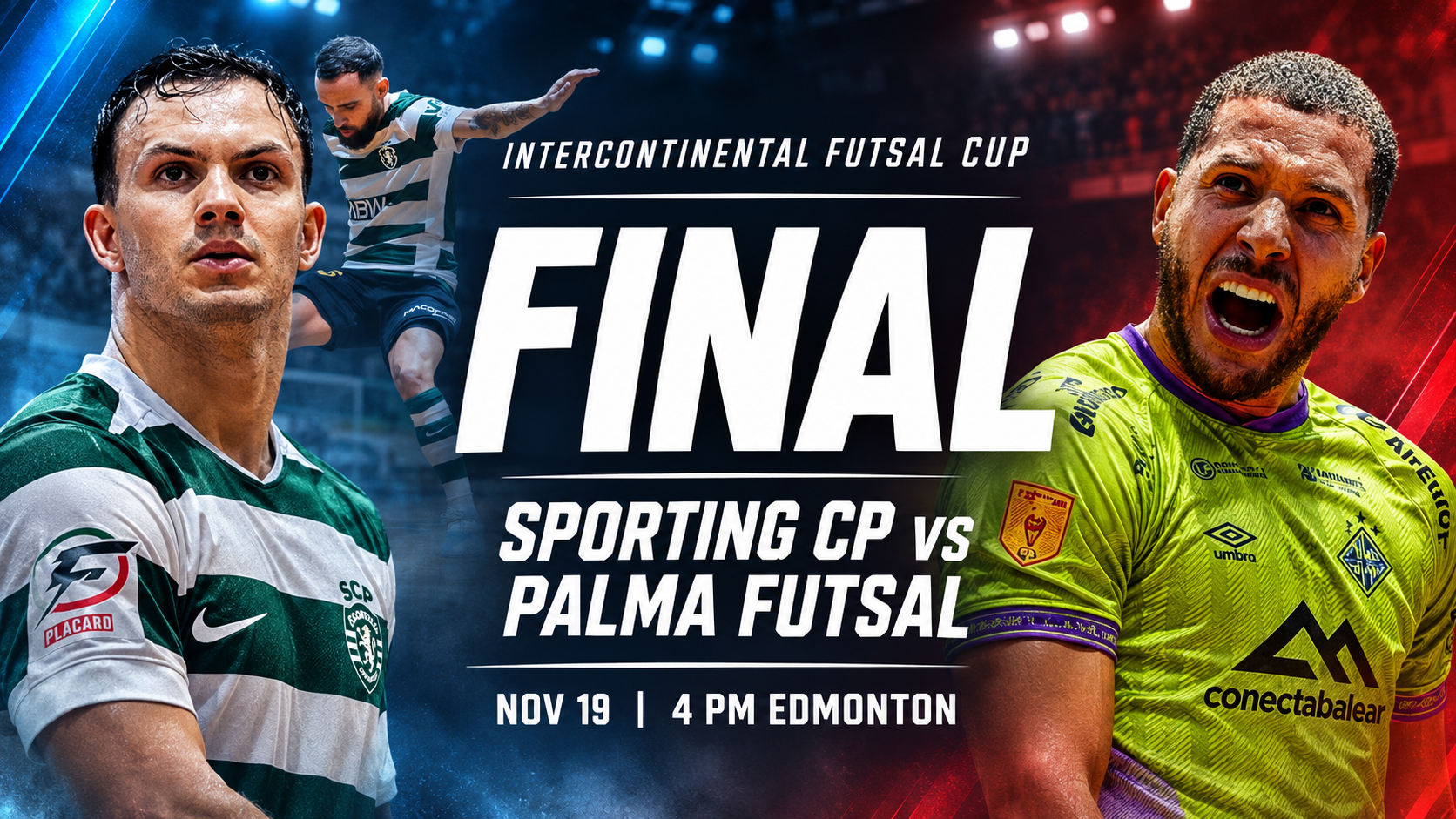
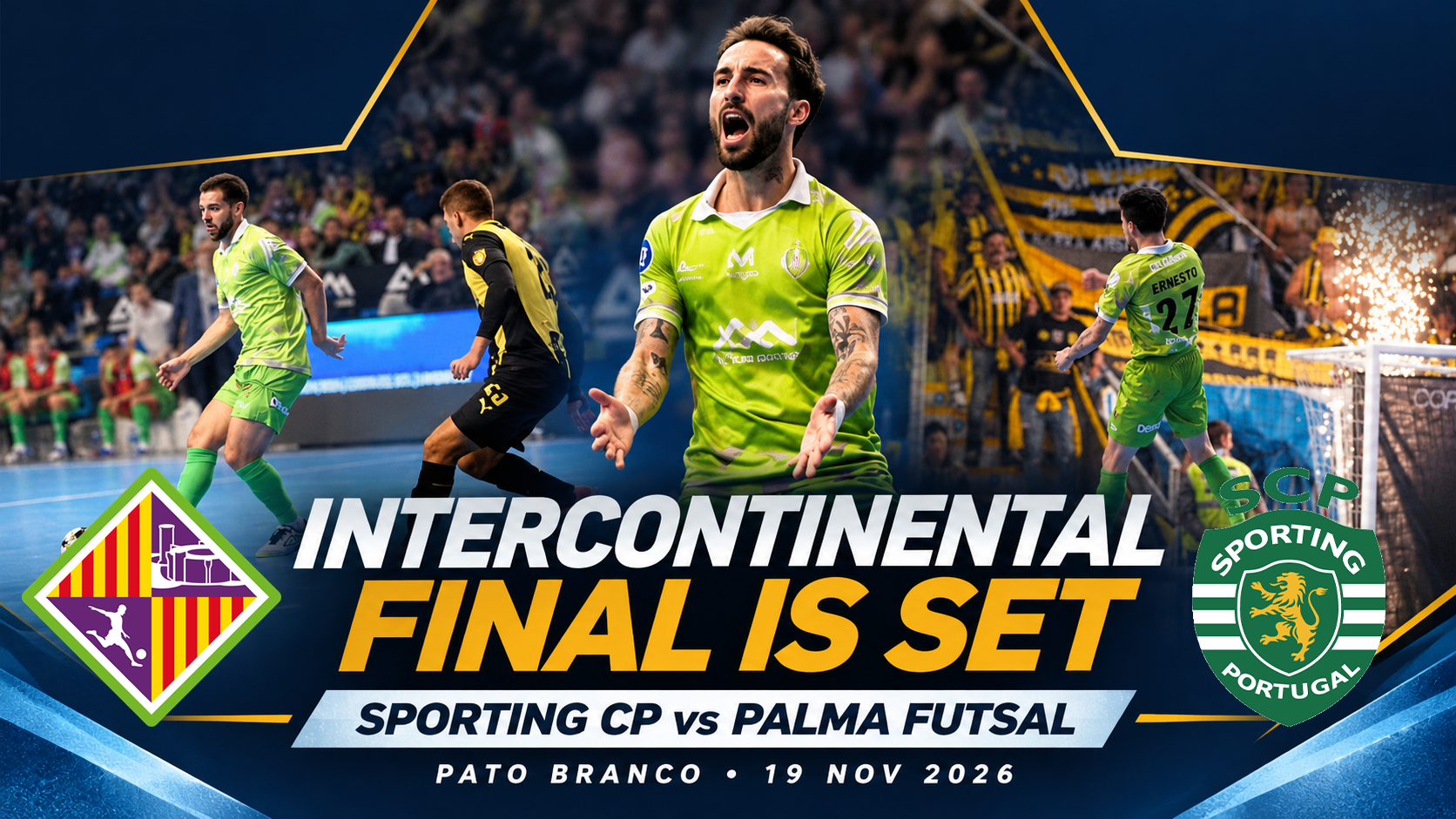
Sporting CP are Intercontinental Futsal Cup champions for the first time, and they achieved it in a final that almost escaped them. The Portuguese club beat Spain’s Illes Balears Palma Futsal 5–4 on Thursday, November 19, at the Arena Cláudio Petrycoski, surviving a furious late comeback after building a four-goal halftime lead.
It is a landmark result for Sporting and for Portuguese club futsal. The Lisbon side became the first Portuguese winner of the competition, while Palma’s pursuit of a fourth consecutive Intercontinental title ended one goal short. Six months after Sporting beat Palma 2–0 in the UEFA Futsal Champions League final, the clubs met again for another major trophy, with the same winner.
Sporting Build a Four-Goal Lead
The final started at an extraordinary pace. Alex Merlim put Sporting ahead in the second minute, and Ivan Chishkala doubled the advantage in the 13th after a move down the right involving Erick Mendonça.
Sporting’s transitions and movement then stretched Palma’s defence. Diogo Santos and Tomás Paçó were central to the attacking combinations that produced two further goals before the break. By halftime, the scoreboard read 4–0, a remarkable position against opponents who had won the previous three editions of this event.
Palma, coached by Antonio Vadillo, had entered Brazil as defending champions and had already overcome difficult moments to reach the final. But a four-goal deficit demanded a different match in the second half, with greater attacking risk and very little room for another concession.
Palma Turn 5–1 Into a Final-Minute Thriller
Fabinho gave Palma hope in the 31st minute, finishing after a set-piece sequence to cut the deficit to 4–1. Almost immediately, however, Tomás Paçó punished an advanced goalkeeper position to restore Sporting’s four-goal cushion at 5–1.
For many teams, that would have been the end of the contest. Palma refused to accept it.
Deivão scored in the 36th minute, and Vadillo then committed to a five-player attacking system, using a flying goalkeeper to create an extra passing option. Ernesto struck in the closing stages to make it 5–3. Carlos Gómez followed with another goal, leaving only one between the clubs with roughly 45 seconds remaining.
The final seconds were frantic. Palma generated one last attacking sequence, but Sporting goalkeeper Oleksandr Sukhov produced crucial saves to preserve the advantage. Sporting had led by four at halftime and by four again in the second period, yet still needed to defend the narrowest possible margin at the final whistle.
The 5–4 result was decided in regulation time. There was no extra-time period or penalty shootout.
A Second Final, a Second Sporting Victory
This was not simply another international final between unfamiliar opponents. Sporting and Palma had already contested the UEFA Futsal Champions League title in May, when Sporting won 2–0 in Pesaro, Italy.
Their meeting in Pato Branco offered Palma an immediate opportunity to answer that defeat, while Sporting sought to add the one international club trophy missing from its collection. The outcome reinforced Sporting’s extraordinary year: European champions in the spring, Intercontinental champions in November.
It also ended Palma’s three-title streak in the Intercontinental Cup, built in 2023, 2024 and 2025. Reaching a fourth straight final remains an exceptional achievement for the Mallorcan club, but Sporting’s first-half efficiency created a deficit that even a courageous final push could not erase.
Brazil Host the World, but Europe Take the Top Prize
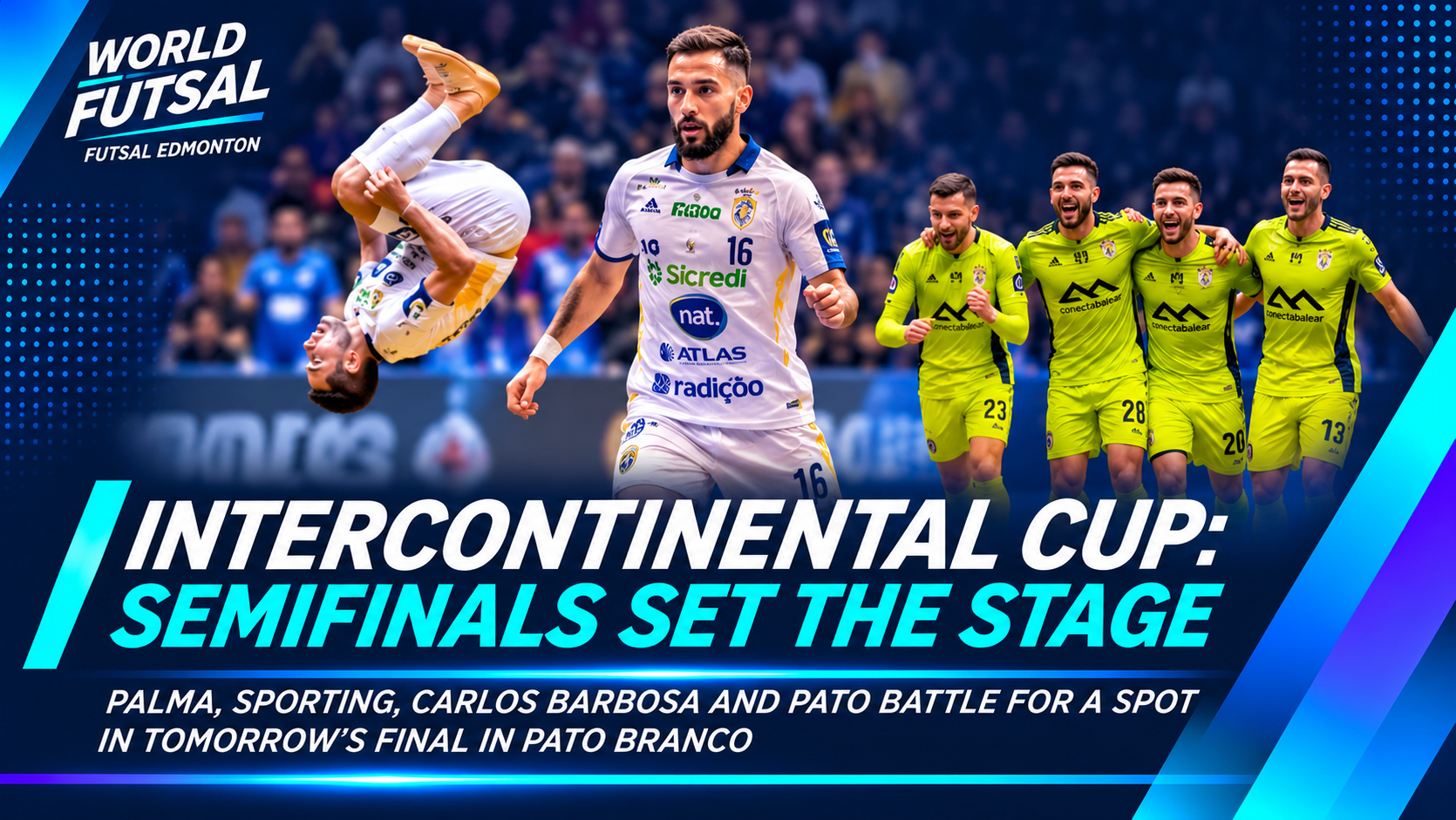
The 2026 tournament brought six clubs from five countries to Pato Branco, with sides representing Brazil, Portugal, Spain, Saudi Arabia and Indonesia. Sporting defeated Indonesia’s Bintang Timur Surabaya and Brazil’s Carlos Barbosa in the group stage before eliminating hosts Pato Futsal 7–4 in the semifinal.
Palma reached the final after beating Saudi Arabia’s Al-Ula, Pato in the group stage and Carlos Barbosa 3–1 after extra time in its semifinal.
Brazil still featured prominently on the final day. Carlos Barbosa beat Pato 4–2 in the third-place match, while Pato’s Duduzinho was named the tournament’s most valuable player, according to Brazilian match coverage. Sporting’s Tomás Paçó, goalkeeper Sukhov and coach Nuno Dias also received individual honours.
The final’s wider lesson is how closely elite futsal matches can turn on transitions and goalkeeper decisions. Sporting’s ruthless opening half established the platform for history. Palma’s late use of the extra attacker nearly rewrote it. For neutral viewers, nine goals and a last-second defensive stand delivered a fitting conclusion to the expanded tournament.
Sporting leave Brazil with the Intercontinental trophy. Palma leave without a fourth straight title, but with a comeback that ensured the final remained alive until the final whistle.